Is Vibe Coding Over?
The trend says yes. Education says no — and the best part hasn't happened yet.
The Short Answer
No — vibe coding isn't over. It just hasn't reached its biggest, most unrealized market yet: education.
Lately a wave of posts and videos have asked "is vibe coding over?" The argument is usually the same: the initial novelty has worn off, the demos feel repetitive, and the hype has cooled into something more ordinary. There's truth in that. The first flush of anything new always fades.
But "the hype cooled" is not the same as "the idea is dead." Vibe coding — describing what you want in plain language and letting AI build it — was never really about novelty. It was about a shift in who does the building. And that shift has barely begun in the place it matters most: classrooms.
In education, vibe coding isn't winding down. It's just getting started — and the most valuable use case is one almost nobody is talking about yet.
Why People Think It's Over
The "is vibe coding over" argument, fairly.
The skeptics aren't wrong about everything. A lot of early vibe coding content was thin: the same text-to-app demos, the same landing-page generators, the same "watch me build a CRUD app in 60 seconds" videos. Once you've seen a few, you've seen them all. The category started to feel like a parlor trick.
There's also a real limitation: for professional software engineers, vibe coding is a productivity boost on top of skills they already have. It doesn't fundamentally change who can build software. So for that audience, the "revolution" framing was always oversold — and the correction is fair.
But that critique lives in one industry. Step outside software and the picture flips completely.
The Unrealized Upside
In education, vibe coding
hasn't happened yet.
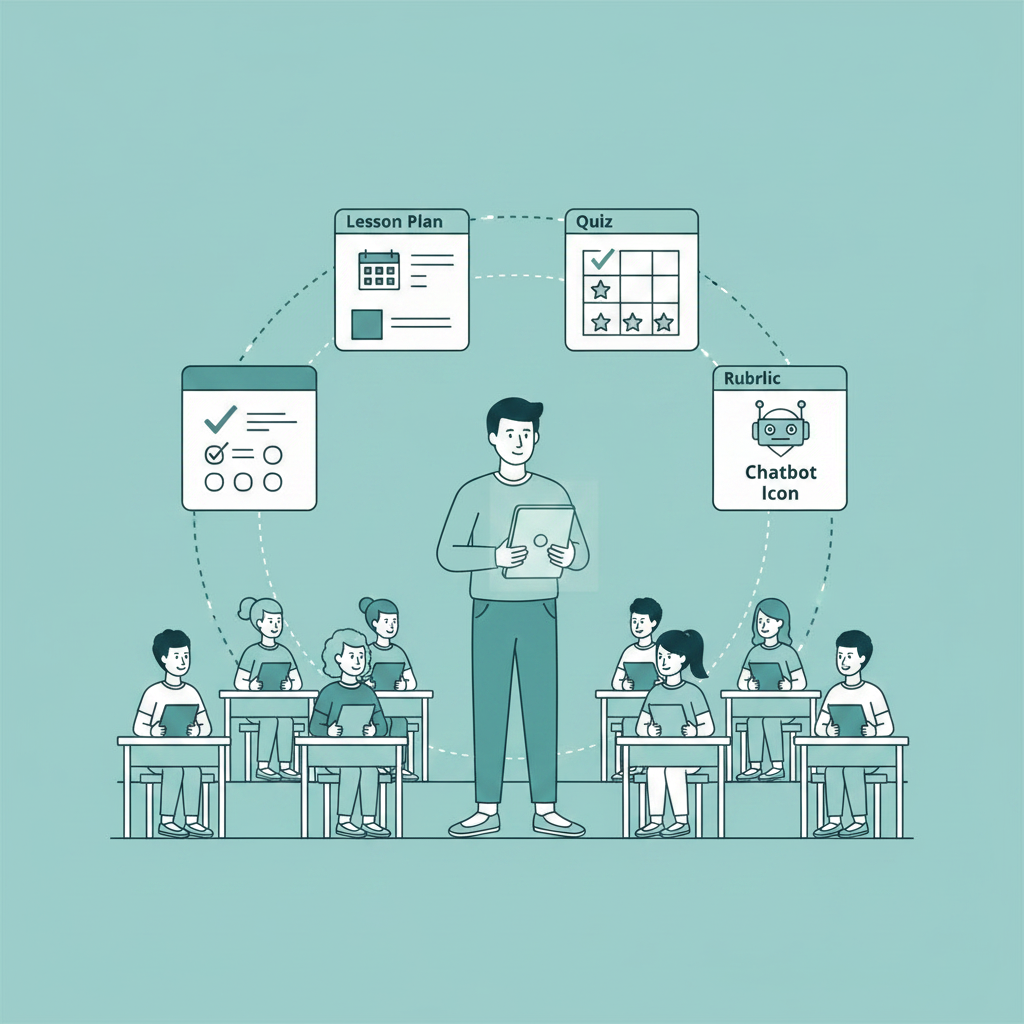
Teachers are the largest professional workforce in the world that still builds its core deliverables by hand. A biology teacher doesn't just write a lesson plan — they cobble together a lab activity, a worksheet, a quiz, an exit ticket, a rubric, and maybe a discussion prompt, each in a separate tool, each from a blank page. Multiply that across every lesson, every week, every subject. The manual burden is enormous, and it's exactly the kind of work vibe coding was made to dissolve.
And yet most "AI for teachers" tools still treat the teacher like a form-filler: pick a template, fill in fields, get one document back. That's not vibe coding. That's a slightly faster version of the old way. The actual shift — describe your lesson once, get a coherent bundle back — is still rare, and the most powerful version of it is almost entirely unrealized.
That version is this: generating interactive simulations and labs alongside the assignments and exit tickets that assess them — in a single pass.
The Use Case Nobody Talks About
Simulations and labs, generated with their own assessments, at once.
Interactive Simulations
A teacher describes a concept — say, enzyme activity or membrane transport — and gets a working, manipulable simulation students can actually experiment with.
Matching Assignments
At the same moment, an assignment is generated that asks students to use the simulation, collect data, and draw conclusions from what they observe.
Aligned Exit Tickets
And an exit ticket is generated that checks whether the learning objective landed — all three coherent, all from one description.
This is the part that's genuinely new. A single AI chatbot or a single worksheet generator is a convenience. A system that produces a runnable lab and the assessment materials designed to go with it — from one sentence of teacher intent — is a different category of tool entirely. It collapses what used to take a curriculum team days into seconds, and it puts interactive, inquiry-based learning within reach of every teacher, not just the ones with the time and technical skill to build simulations themselves.
That's not a parlor trick. That's the unrealized benefit the "is vibe coding over" conversation keeps missing, because the people having it are still looking at software demos — not at classrooms.
Why This Is Early, Not Late
The "over" framing measures the wrong curve.
What's actually over
The novelty phase of text-to-app demos for developers. The "wow, it made a button" moment has passed. Fine.
What's just beginning
Vibe coding for non-developers — especially teachers — where the AI builds not just documents but interactive learning experiences and their assessments together. That curve is at the bottom, not the top.
The "is vibe coding over" question is really asking "is the developer-side hype over?" Maybe. But the bigger story is that the same idea, applied to the largest manual-building workforce on earth, is only now becoming possible — and the simulations-plus-assessments use case is the proof it has real room left to run.
See Vibe Coding That Isn't Over
Describe a lesson and generate a simulation, assignment, and exit ticket together — in seconds. Free to start.
Try It Free