When the Process Is the Only Evidence You Have
If a tool decides your writing looks machine made, arguing about it is unwinnable. A documented record of your process changes what you are able to point at.

You wrote the essay. A tool says it looks machine written. Now the burden is on you to prove something you never imagined you would have to prove.
This is the strangest part of the AI era for students: the accusation can arrive without anyone reading your work closely. A percentage appears, and the conversation starts from there.
Why "I didn't use AI" does not work
Because it is a denial, and denials are hard to weigh. Your teacher is holding a number, you are holding your word, and the two are not the same kind of thing. Even when you are completely honest, the conversation is about belief rather than evidence.
That is not a fair position for anyone to be in, and it is not a criticism of your teacher. It is a criticism of the tool. A detector cannot see how a piece of writing was made, so the only thing left to argue about is how it looks.
What you can actually point at
When you write inside a writing assignment workspace, a record is built as you go. It is yours, and it holds things that are specific enough to be checked.
- Your drafts. Snapshots are taken while you write, so the piece can be replayed from an empty page to your submission.
- Your time. The record shows how long the workspace was open and how much of that time you were typing, including the long pauses. Pauses are where thinking happens, and they are visible.
- Your revisions. The paragraph you deleted, the argument you moved, the ending you changed twice. Rewriting is the clearest evidence of a person working.
- The questions you asked. Every question to the writing helper and every answer is saved. Asking for a definition, a nudge, or the next step is a normal part of writing, and it is also a record of you thinking.
- What you pasted. If you moved text in from your notes, the record shows that it happened and what it was. Pasting your own notes is not cheating. It is also not hidden.
"[!NOTE] Why the helper will not write for you The writing helper is set up to guide, never to produce sentences for you to hand in. If you ask it for an opening paragraph, it declines and offers the next thinking step instead. That can feel unhelpful in the moment. It is also the reason your record is worth something: everything in your finished piece came from you.
What the record does not do
The record is not a character reference, and it is not proof that you are innocent of everything.
- It cannot show what you read or thought about before you sat down.
- It cannot show work you did on paper or in a conversation.
- It does not produce a score about you, and it never accuses you.
- It does not decide anything. Your teacher still decides, and that is a person, not a percentage.
What it does is move the conversation from "does this look like you" to "here is what happened, let's talk about it". That is a much better conversation to be in.
You can see who reads it
Every time a teacher or principal opens your record, the access is written into your own log, with who opened it and when. You do not have to wonder whether someone looked at your work.
That transparency matters, because a record that only adults can read is just surveillance with better organisation.
"[!TIP] If you are accused anyway Ask two questions. "What specifically in my writing is the concern?" and "Can we look at my record together?" A specific question can be answered. A percentage cannot.
What this changes for you
Writing well is not suspicious. Working slowly is not suspicious. Asking for help is not suspicious. When the process is documented, those things stop being things you have to explain and become things you can simply show.
The full picture of the assignment, including what your teacher sees, is on the Fair Writing Record Assignment page.
If you want to understand why the percentage was never trustworthy in the first place, read why AI detectors harm students. If you have already been accused and are trying to work out what to do next, read when a student is falsely accused of AI cheating.
Your teacher's side of the same conversation is here: What a Fair Writing Record Can and Cannot Show.
Continue Reading
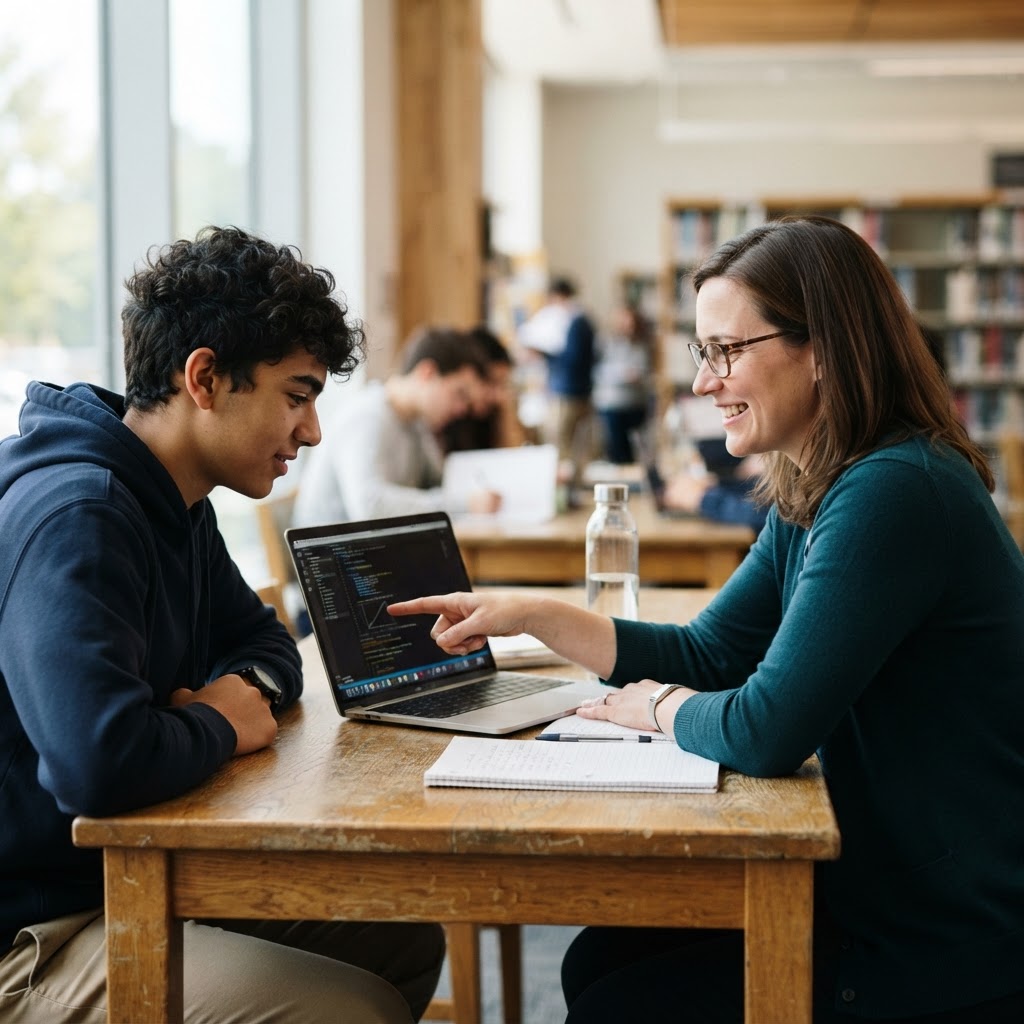
What a Fair Writing Record Can and Cannot Show
A process record tells you how a piece of writing was made. Here is what that evidence actually supports, what it leaves open, and how to say so plainly when a family asks.
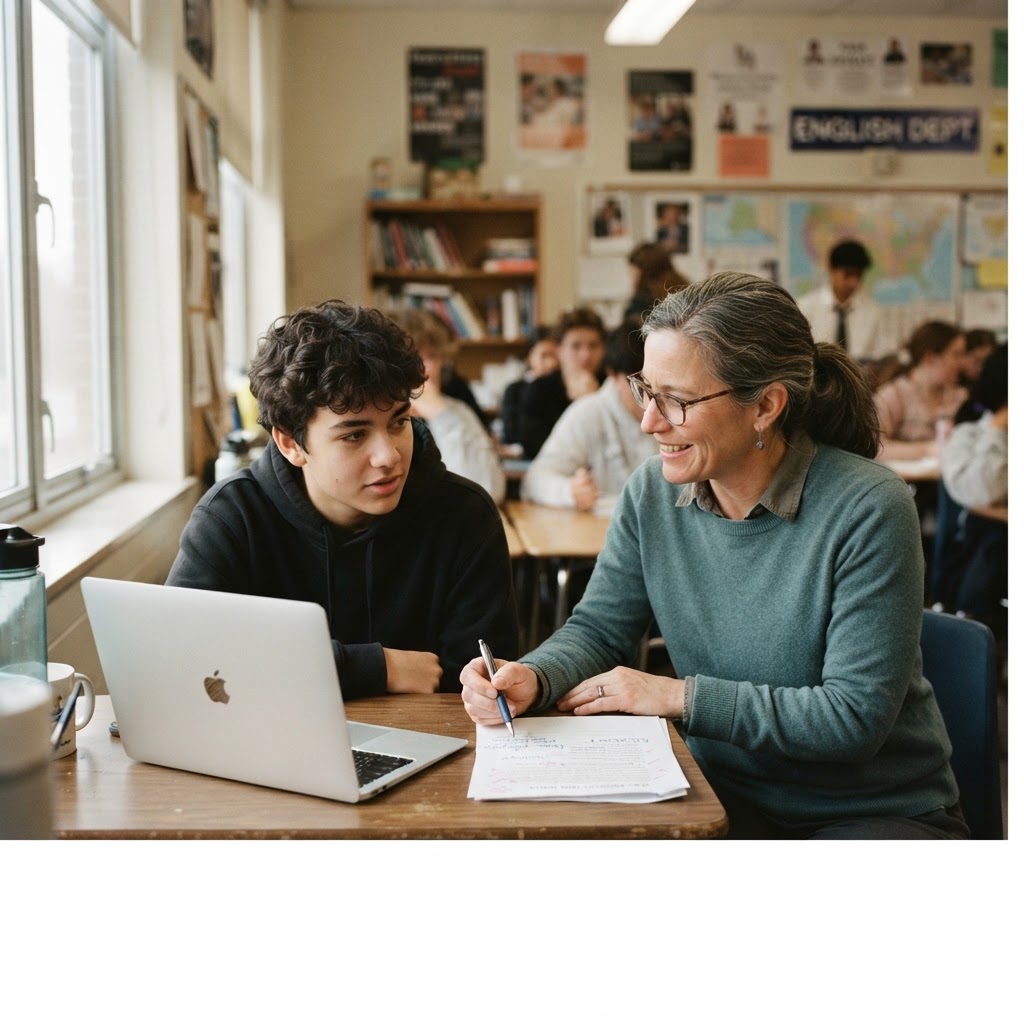
What to Do When Your Student Is Falsely Accused of AI Cheating
A teacher's action guide for defending a student falsely accused of AI cheating. Four immediate steps, six types of evidence that prove human authorship, a conversation script, institutional escalation guidance, the equity alert on which students are most at risk, and prevention strategies.

A Writing-Evidence Practice a Principal Can Explain
When two classrooms handle the same suspicion differently, the school carries the risk. A shared, logged evidence practice makes the decision explainable to a family.
Ready to Transform Your Teaching?
Describe your lesson idea once. Get a complete teaching bundle in seconds.
See How It Works