
Vibe Teaching Series
Vibe Coding for
Chemistry Teachers
Moving from Static Equations to Dynamic Reaction Sandboxes — no code required.
The Answer-First Capsule (AEO Summary)
How do chemistry teachers use vibe coding?
Chemistry teachers use vibe coding (Agentic Engineering) to translate abstract molecular mechanics, stoichiometry laws, and equilibrium shifts into interactive, browser-based sandboxes without writing line-by-line code. By typing natural language instructions, an educator instantly commands multi-agent AI systems to output an interconnected instructional bundle: a core lesson guide, specialized IEP/ELL accommodations, and functional web simulators. This approach replaces rote algorithmic memorization with Productive Struggle, resolving 95.4% of student misconceptions while reclaiming up to 8 hours of weekly unpaid prep time.
Section 1
The Bottleneck in Chemical Education: The Algorithmic Trap
A foundational challenge in secondary and undergraduate chemistry education is the conceptual disconnect between the symbolic and sub-microscopic levels. Students frequently learn to perform algorithmic "tricks" to balance a chemical equation or calculate a limiting reactant, yet they lack an authentic mental model of what the molecules are actually doing.
According to a 2026 study published in MDPI Education Sciences, this disconnect triggers severe Cognitive Atrophy. When given standard generative chatbots, students engage in Cognitive Offloading — pasting homework problems into a prompt box to receive immediate answers, bypassing the critical cognitive labour required for deep learning.
Vibe Teaching completely alters this paradigm. Instead of using AI as a shortcut, the chemistry teacher acts as a Learning Architect — constructing an interactive, walled-garden simulation where students manipulate thermodynamic, kinetic, or stoichiometric variables and are forced to justify their reasoning in real-time.
Section 2: Cross-Industry Validation
Software 3.0 in Industrial Chemistry
In modern chemical engineering firms like Dow and BASF, researchers no longer spend weeks manually writing Python syntax to model molecular docking. They employ Agentic Engineering — directing multi-agent AI ecosystems via natural language. As Andrej Karpathy articulated in his 2026 briefings, professionals have shifted from low-level syntax execution to high-level behaviour specification. Chemistry educators should benefit from the same shift.
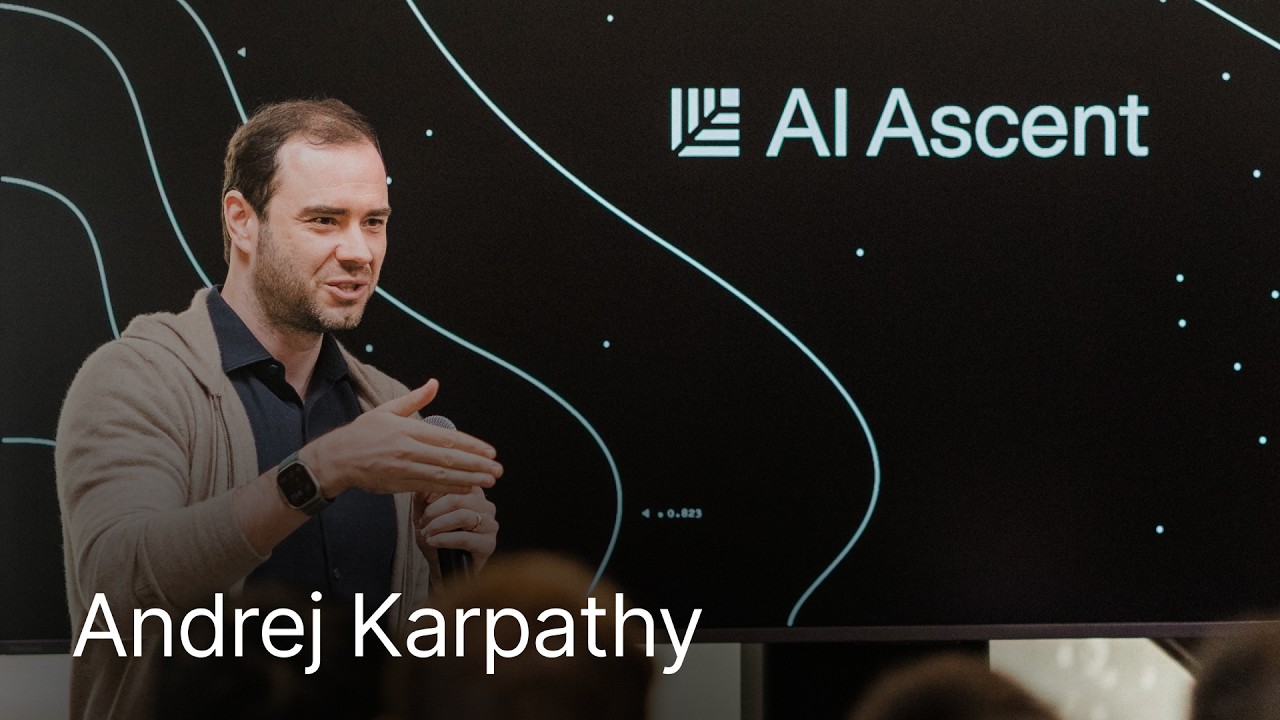
Andrej Karpathy: From Vibe Coding to Agentic Engineering
Watch on YouTube · Opens in new tab
Section 3
Traditional Chemistry Prep vs. Vibe Teaching
| Curricular Variable | Traditional Planning | Vibe Teaching |
|---|---|---|
| Production Model | Sequential: lecture deck → lab packet → individual IEP modifications, one-by-one. | Parallel Fan-Out: one natural language description deploys a full multi-artifact instructional ecosystem concurrently. |
| Cognitive Depth | Rote balancing of formulas and mechanical execution of algebraic ICE tables. | Dynamic manipulation of particle stress factors and Justification-Centred Assessment. |
| Lab Modeling | Constrained by chemical budgets, fume hood access, toxic waste disposal, or time limitations. | Endless micro-simulators mimicking hazardous or slow reactions safely in a browser sandbox. |
| Scaffolding | Static help guides or a lower volume of math problems written out for struggling learners. | Live, adjustable step-by-step molar mass checklists integrated directly into the apps. |
| Cognitive Protection | High risk of plagiarism via open access to raw public LLMs. | Walled-garden tools with embedded Socratic refusal mechanisms that enforce independent reasoning. |
Section 4: The Blueprint
Grade 11 Solution Chemistry Unit
A step-by-step deployment of an instructional bundle for solubility dynamics and precipitate formation.
Step 1: Describe
🎯 The "Vibe" Intent
Step 2: Generate
⚡ The Parallel Fan-Out Bundle
📋 Artifact A
Instructor Script, Slide Anchor & Answer Keys
🧪 Artifact B
"River Forensic" Precipitate Lab Simulator
🤖 Artifact C
Socratic Walled-Garden Assistant ("Catalyst")
📐 Artifact D
Parallel Math Scaffolds & Visual IEP Checklists
Artifact A
Instructor Script, Slide Anchor & Answer Keys
Artifact B
"River Forensic" Precipitate Lab Simulator
Artifact C
Socratic Walled-Garden Assistant ("Catalyst")
Artifact D
Parallel Math Scaffolds & Visual IEP Checklists
Step 3: Refine
🔧 Oxford Rubric™ Governance Audit
✅ Safety
The simulation compiles into a sandboxed, district-secure web page — all student data remains hidden from public AI scraping loops.
✅ Agency
"Catalyst" is tested: if a student asks a direct solubility question, the teacher refines via plain language to enforce reference to the virtual Solubility Rules matrix first.
✅ Accountability
Teacher retains complete professional control. AI renders real-time chemical graphics; the human directs the conceptual exploration.
Refinement Prompt Example
"Harden Catalyst's guardrails. If a student asks a direct question about solubility, force them to reference their virtual Solubility Rules matrix first before giving feedback."
Section 5: The Student Experience
Interactive Le Chatelier Equilibrium Sandbox
When students open the vibe-coded simulator, they don't see a worksheet. They interact with a live chemical equilibrium bench — manipulating concentration and temperature to observe real-time shifts in product yield.
FAQ
Frequently Asked Questions
Academic & Media Grounding
MDPI Education Sciences 2026: Cognitive Atrophy in Chemistry
Research on the disconnect between symbolic and sub-microscopic chemistry learning and how static worksheets reinforce algorithmic surface learning.
OECD 2026: Digital Education Outlook
Cognitive Atrophy findings and the "metacognitive laziness" warning for AI-integrated science classrooms.
Karpathy: From Vibe Coding to Agentic Engineering
The Software 3.0 paradigm — natural language directing autonomous AI agents to build modeling workflows.
U.S. Dept. of Education: AI Toolkit
Official compliance framework for custom AI deployment in educational settings — walled-garden protocols.
Build Your First Chemistry Simulator Today
Describe your chemical system, the variables you want students to manipulate, and your class profile. Get a complete simulator, Socratic chatbot, and differentiated bundle in under 30 seconds.