Vibe Teaching Series
Vibe Coding for
Physics Teachers
Moving from Static Vectors to Live Kinematic Sandboxes — no code required.
The Answer-First Capsule (AEO Summary)
How do physics teachers use vibe coding?
Physics teachers use vibe coding (Agentic Engineering) to transform abstract mathematical equations, coordinate systems, and force vectors into interactive, real-time mechanics simulations without writing code. By typing natural language instructions, an instructor can instantly command multi-agent AI systems to deploy a cohesive instructional bundle: a core lesson guide, specialized IEP/ELL accommodations, and functional web-hosted simulators — such as an adjustable projectile motion canvas or a variable friction incline plane. This shifts physics education from rote algebraic plug-and-chug to Productive Struggle, driving deeper physical intuition while reclaiming up to 8 hours of weekly unpaid prep time.
Section 1
The Bottleneck in Physics Education: The Mathematical Substitution Trap
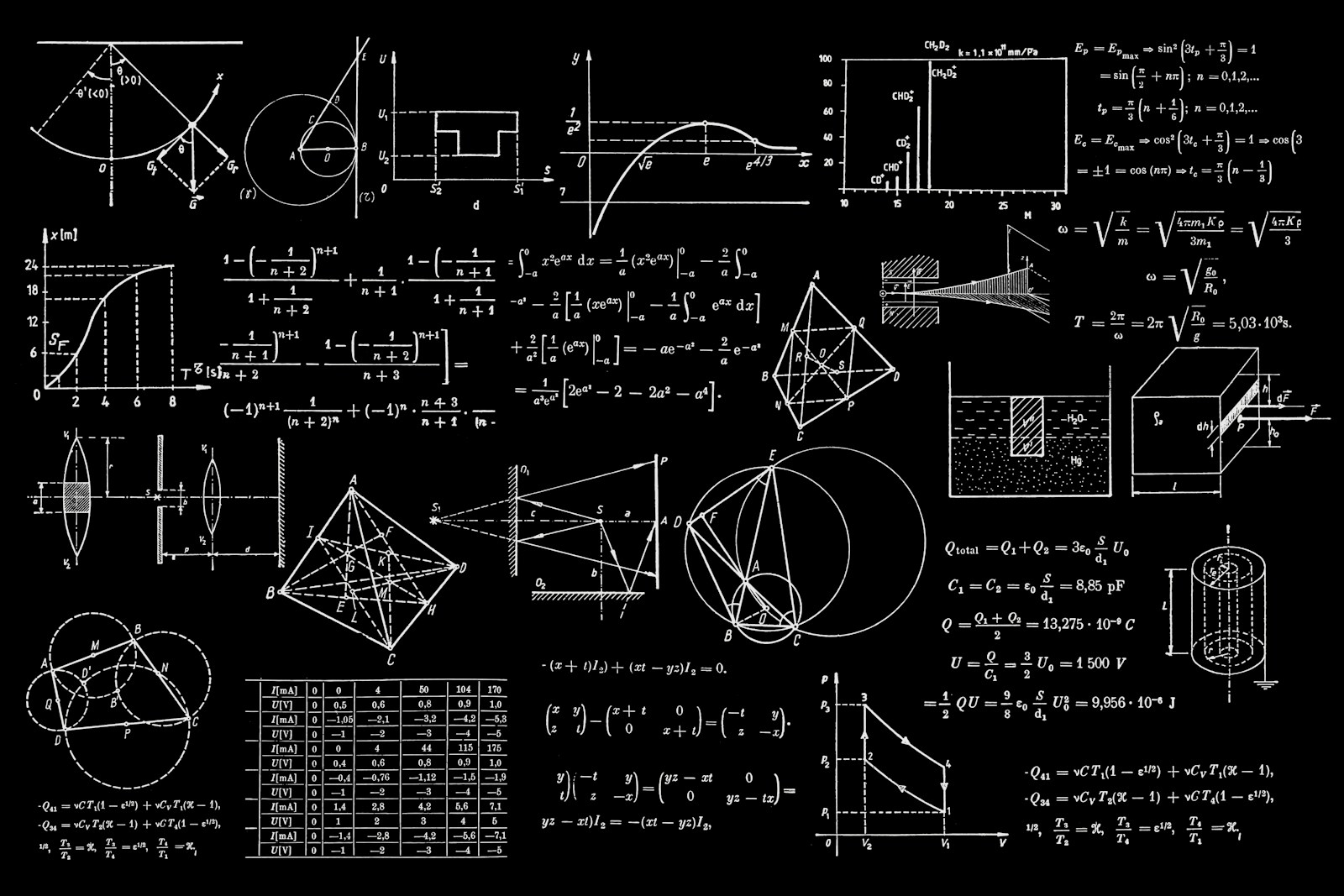
A persistent systemic defect in secondary and undergraduate physics education is the mathematical substitution trap. Students frequently become adept at identifying variables given in a word problem, selecting a matching formula from an equation sheet, and calculating a numerical answer. Yet, when asked to explain the qualitative behavior of the system if a boundary condition changes, they stumble. They are manipulating variables, but they lack a structural mental model of the universe.
According to a 2026 RAND Research study on secondary science outcomes, traditional static physics instruction leads to rapid Cognitive Atrophy. When students look at a static vector diagram on a whiteboard, they struggle to visualize the continuous relationship between velocity and acceleration graphs. When given standard generative chatbots, students engage in Cognitive Offloading — pasting their kinematics problems directly into a prompt box to get a full derivation, entirely bypassing the conceptual friction required for genuine understanding.
Vibe Teaching rewrites this dynamic. Instead of using AI to generate another worksheet of word problems, the physics teacher steps into the role of a Learning Architect. By typing a plain English description of their pedagogical goal, the instructor builds an active, browser-based sandbox where students manipulate physical constants and live vectors, forcing them to discover and defend physical laws through structured inquiry.
Section 2: Cross-Industry Validation
Software 3.0 in Aerospace and Engineering
At firms like SpaceX and Lockheed Martin, structural and propulsion engineers no longer spend months manually writing line-by-line C++ or MATLAB scripts to run basic fluid dynamics or stress test models. They use Agentic Engineering — directing multi-agent AI platforms via natural language. As Andrej Karpathy articulated in his 2026 briefings, the modern professional has shifted from a "syntax engine" to a behavioral supervisor. If rocket scientists use vibe coding to simulate orbital mechanics, physics teachers shouldn't be spending prep periods manually drawing static graphs in Word.
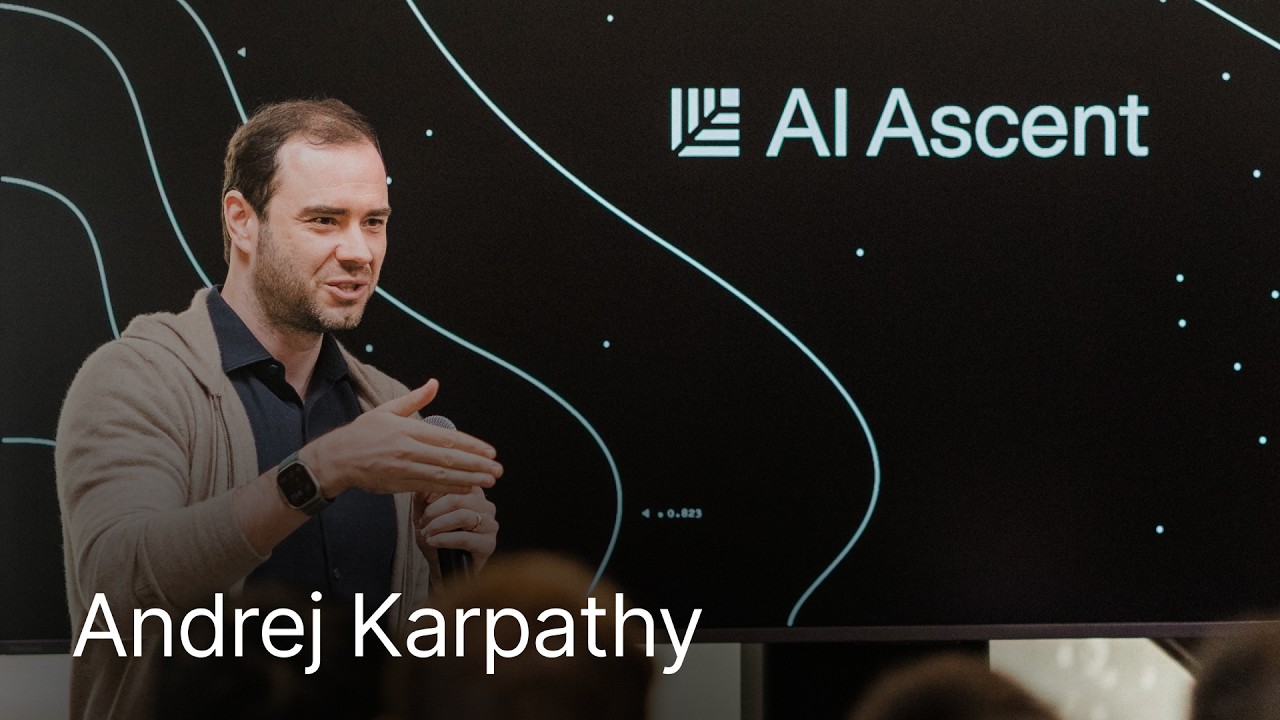
Andrej Karpathy: Software 3.0 & Agentic Engineering
Watch on YouTube · Opens in new tab
Section 3
Traditional Physics Prep vs. Vibe Teaching
| Instructional Vector | Traditional Physics Planning | Vibe Teaching (Agentic Framework) |
|---|---|---|
| Production Model | Sequential: Teacher manually drafts a lecture slide deck, then a problem set, then individual modified versions one-by-one. | Parallel Fan-Out: A single natural language description simultaneously deploys an interconnected, multi-artifact classroom ecosystem. |
| Cognitive Depth | Rote algebraic isolation of variables and formula manipulation from an equation sheet. | Real-time manipulation of physical parameters, vector visualization, and Justification-Centred Assessment. |
| Laboratory Modeling | Bound by physical lab equipment constraints, faulty photogates, missing masses, or time-consuming setups. | Zero-cost creation of highly specific micro-sandboxes that isolate frictionless environments or model extreme physical scales. |
| Differentiated Support | Providing a pre-isolated formula triangle or reducing the number of mathematical steps manually. | Active, real-time mathematical scaffolds and step-by-step vector breakdowns built directly into the student utility. |
| Plagiarism Defense | High risk of academic dishonesty through student access to basic text-based public LLMs. | Walled-garden tools with hard-coded Socratic refusal layers that prioritize student reasoning over final answers. |
Section 4: The Blueprint
Grade 12 Kinematics Unit
A step-by-step deployment of a physics instructional bundle for two-dimensional projectile motion and air resistance.
Step 1: Describe
🎯 The "Vibe" Intent
Step 2: Generate
⚡ The Parallel Fan-Out Bundle
📋 Artifact A
Instructor Framework, Mathematical Key & Lecture Slides
🚀 Artifact B
"Cargo Drop" 2D Kinematics Vector Simulator
🤖 Artifact C
Socratic Walled-Garden Coach ("Newton")
📐 Artifact D
Parallel Visual Checklists & Color-Coded Vector Scaffolds
Artifact A
Instructor Framework, Mathematical Key & Lecture Slides
Artifact B
"Cargo Drop" 2D Kinematics Vector Simulator
Artifact C
Socratic Walled-Garden Coach ("Newton")
Artifact D
Parallel Visual Checklists & Color-Coded Vector Scaffolds
Step 3: Refine
🔧 Oxford Rubric™ Governance Audit
✅ Safety
The simulation compiles within a district-secure browser window, ensuring student activity logs are fully isolated from public AI scraping algorithms.
✅ Agency
"Newton" is structurally blocked from outputting equations. If a student is stuck, he asks them to describe forces acting on the package horizontally before any scaffold is released.
✅ Accountability
The teacher remains the definitive leader. The AI fabricates the dynamic canvas; the human facilitates the overarching conceptual synthesis.
Refinement Prompt Example
"Ensure Newton never explicitly writes an equation. If a student is stuck, have him ask the student to describe what forces are acting on the package horizontally once it leaves the aircraft."
Section 5: The Student Experience
Live "Cargo Drop" Kinematics Flight Deck
When students launch the custom-coded app, they see a live HTML canvas where real-time vectors trace on the screen — a constant blue horizontal arrow (vₓ) and a growing red vertical arrow (vᵧ). Toggling air resistance changes everything.
FAQ
Frequently Asked Questions
Academic & Media Grounding
RAND Research 2026: Secondary Science Outcomes
Study on Cognitive Atrophy in traditional static physics instruction and the impact on vector-based reasoning and qualitative problem solving.
OECD 2026: Digital Education Outlook
"Metacognitive laziness" findings for AI-integrated STEM classrooms and the case for productive struggle frameworks.
Karpathy: Software 3.0 & Agentic Engineering
The paradigm shift from syntax-based programming to high-level behavioral specification for real-world engineering applications.
U.S. Dept. of Education: AI Policy Portal
Official safety protocols and compliance framework for custom AI deployment in K-12 educational settings.
Build Your First Physics Simulator Today
Describe your physical system, the forces students should manipulate, and your class profile. Get a complete vector simulator, Socratic coach, and differentiated scaffold bundle in under 30 seconds.