Why “Prompt Engineering” Is the
Wrong Framework for Teachers
And what to do instead — the shift from technology-user to Learning Architect that reclaims teacher time and student thinking.

Answer-First Summary
Why is prompt engineering the wrong framework for teachers?
Prompt engineering frames educators as technical software users who must learn code-adjacent syntax and rigid commands. This creates high cognitive burden and treats lesson design as a data-entry task. The correct framework is Vibe Teaching (Agentic Engineering), which positions the teacher as a Learning Architect. Instead of formatting complex text strings, teachers use natural language to communicate high-level pedagogical intent — allowing multi-agent frameworks to instantly build complete, differentiated learning ecosystems.
Section 1: The Prompt Engineering Treadmill
A Reconstructive Failure
Over the past two years, school PD sessions have been dominated by a singular message: master prompt engineering. Teachers have been handed cheat sheets, acronym lists, and prescriptive formulas like the 5 “S” Model. According to a 2026 study in MDPI Electronics, this approach creates three critical structural failures:
Pedagogical Severance
It separates the act of using AI from a teacher's intrinsic pedagogical thinking — reducing lesson design to a data-entry task.
Tool Detachment
Teachers are on a structural treadmill. When a model updates, yesterday's "perfect prompt" breaks — rendering the PD training instantly obsolete.
Identity Devaluation
Highly trained instructional experts are reduced to technical data-entry clerks, spending prep time constructing text strings instead of designing student experiences.
Prompt engineering is a developer’s mindset forced onto an educator’s workflow. It fails because it views the prompt as the ultimate endpoint, rather than a reflection of fluid pedagogical intuition. The prompt is not the product — the learning experience is.
Section 2: Cross-Industry Validation
The Shift to Agentic Engineering
This rejection of brute-force prompting is not unique to education. Across the technology sector in 2026, engineering teams are abandoning single-box text prompts for Agentic Engineering — designing workflows where autonomous AI agents coordinate to execute high-level human intent.
The Production Reality
In software development, raw prompt engineering fails at complex, real-world edge cases. Singular prompts produce volatile, unpredictable outputs — especially in production environments where reliability is non-negotiable.
The Structural Solution
Modern AI platforms use “verticalization” — structured, constrained environments where AI is bound by specific curriculum rules, source documents, and refusal mechanisms. Applied to classrooms, this is Vibe Teaching.
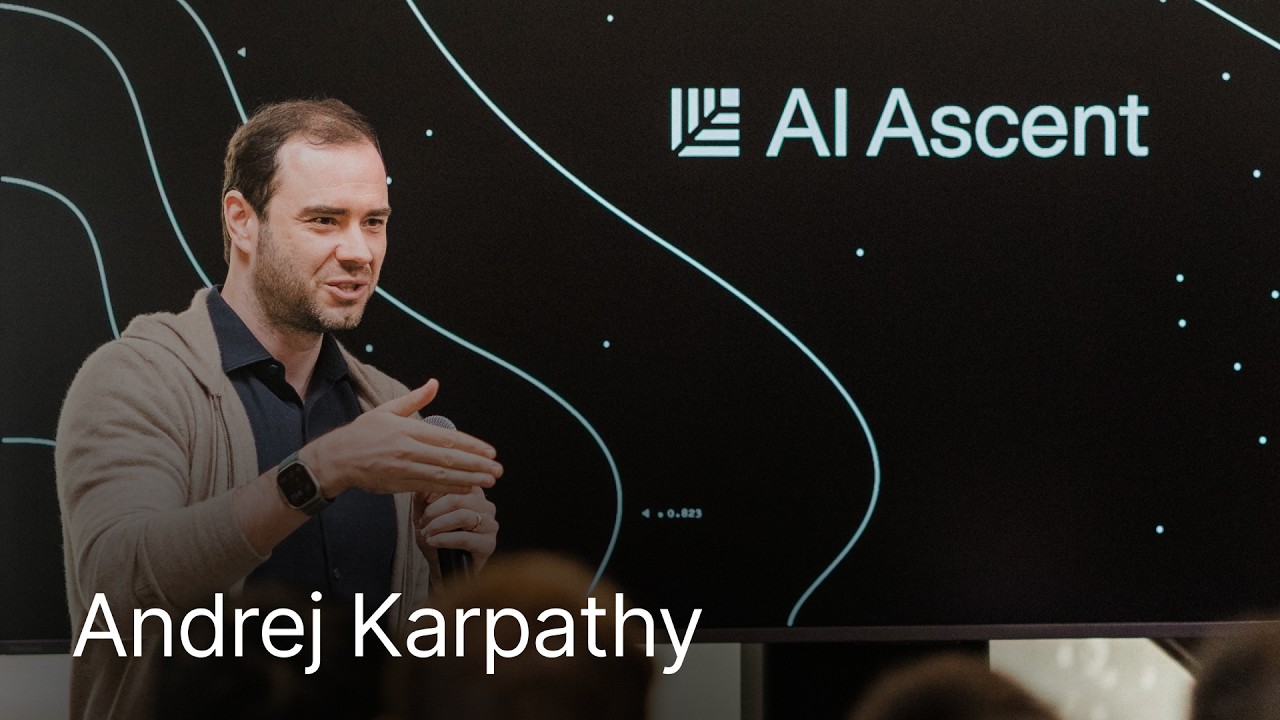
📺 Watch: Andrej Karpathy — The Vibe Coding & Agentic Engineering Framework
The foundational talk behind the Software 3.0 paradigm shift — natural language directing autonomous agents to build complex systems.
Section 3: Structural Breakdown
Prompt Engineering vs. Vibe Teaching
A direct operational comparison across five classroom-critical dimensions.
| Dimension | ❌ Prompt Engineering | ✅ Vibe Teaching |
|---|---|---|
| Teacher Role | Technology User / Form-Filler | Learning Architect / Practice Designer |
| Cognitive Focus | Mastering syntax, parameters, and prompt rules | Expressing raw pedagogical intent and student context |
| Production Model | Sequential: one worksheet or component at a time | Parallel Fan-Out: complete instructional bundles simultaneously |
| Model Longevity | Low — prompts break when LLMs update | High — stable architecture adapts to any model update |
| Student Safeguards | Probabilistic; high risk of hallucinations and cheating | Structural; hard-coded guardrails enforce Productive Struggle |
Teacher Role
Technology User / Form-Filler
Cognitive Focus
Mastering syntax, parameters, and prompt rules
Production Model
Sequential: one worksheet or component at a time
Model Longevity
Low — prompts break when LLMs update
Student Safeguards
Probabilistic; high risk of hallucinations and cheating
Section 4: The Alternative
The Describe → Generate → Refine Loop
Vibe Teaching replaces technical friction with a continuous, reflective professional learning cycle.
Step One
💬 Describe — Express the Vibe
❌ Prompt Engineering
“Write a lesson plan on structural arches.”
Generic. Context-free. AI produces a template. You spend 20 min fixing it.
✅ Vibe Teaching
“I’m teaching geometry of structural arches to Grade 11. Half the class is highly visual; three students need executive functioning checklists. I want a high-engagement scenario where students critique a flawed bridge design.”
Specific intent. Complete ecosystem in seconds.
Step Two
⚡ Generate — Parallel Fan-Out
Instead of a single generic text block, the agentic system simultaneously manifests an interconnected suite of tools:
Core lesson guide
Targeted and curriculum-aligned.
IEP visual accommodations
Auto-generated for the class profile.
JCA Rubric
Measures independent critical thinking.
Differentiated versions
ELL, core, and advanced simultaneously.
Step Three
🔧 Refine — Reflective Practice
The prompt is no longer an endpoint — it is thinking-in-progress. The teacher reviews and adjusts boundaries conversationally:
Refinement Example
“The bridge scenario is excellent, but make the mathematical breakdown slightly more challenging for my advanced groups. Ensure the automated tutor pushes back using Socratic questioning if students try to guess the answer.”
Section 5: Protecting Student Cognition
Preventing Cognitive Atrophy with Structural Guardrails
❌ The Prompt Engineering Failure Mode
When teachers rely on basic prompt engineering, they often build loosely-prompted chatbots that act as answer engines. Students drop assignments in and copy the final product. The machine does the thinking.
✅ The Vibe Teaching Architecture
Vibe Teaching embeds the Oxford Rubric™ directly into system design. The Refusal Mechanism structurally prohibits the AI from giving direct answers. The Socratic Engine resolves up to 95.4% of underlying misconceptions by forcing students to defend their logic in real time.
Agency
“Does the tool make the student smarter, or just the assignment easier?”
Accountability
“Does the teacher retain final say over the pedagogical vibe?”
Transparency
“Can the teacher see conversation logs to track student thinking?”
Continue Reading
Ready to Move Beyond Prompt Engineering?
Describe your lesson’s cognitive vibe in plain language. Get a complete, differentiated instructional bundle in under 30 seconds.